
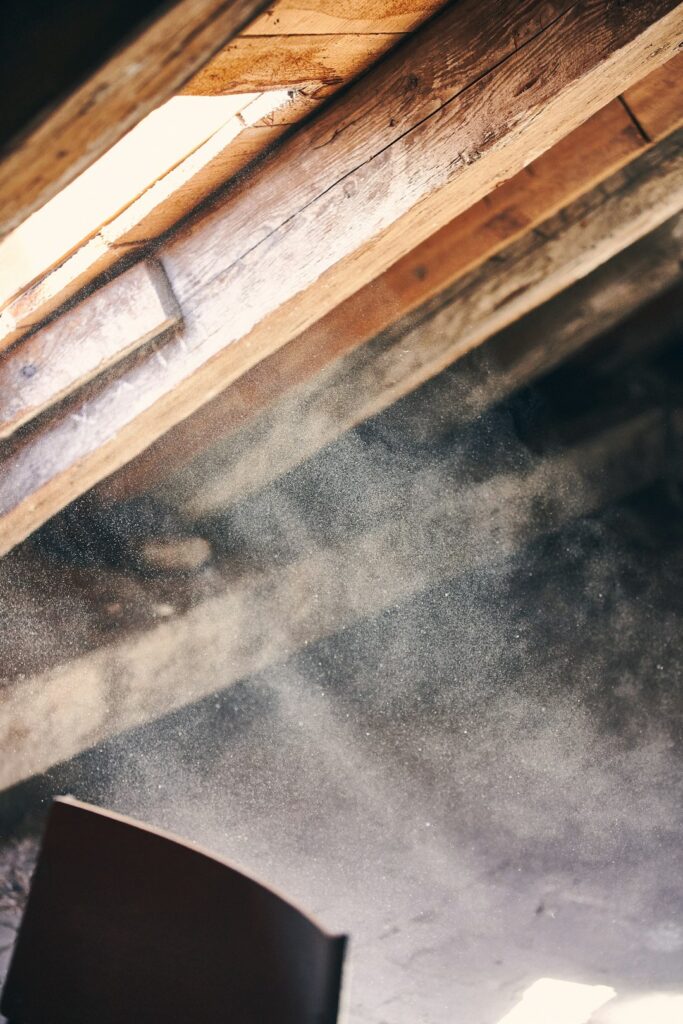
Why does roof ventilation matter in Hamilton, NY?
Proper roof ventilation helps control heat and moisture in the attic. In Hamilton, NY, that matters through long heating seasons, repeated freeze-thaw cycles, winter snow, and humid summer weather.
A roof system is more than shingles. It typically includes the roof covering, sheathing, insulation, air-sealing materials, and the attic or rafter space beneath it. Ventilation allows outdoor air to move through that space in a controlled way, helping the roof assembly stay closer to outdoor conditions.
Without adequate airflow, warm indoor air and moisture can collect in the attic during winter. In summer, heat can build up beneath the roof. Either condition may contribute to premature material wear, condensation, mold growth, or damage to wood components.
How does a properly ventilated roof work?
A well-designed system usually brings air in through lower openings and allows warmer, moist air to leave through higher openings.
Common components include:
- Soffit or eave vents, which allow outdoor air to enter
- Ridge vents, which release warm air near the roof peak
- Gable vents, which provide ventilation through the ends of the attic
- Roof or static vents, which may be used where other options are limited
- Baffles or rafter vents, which keep insulation from blocking airflow at the eaves
The most effective arrangement is generally balanced: intake ventilation should work together with exhaust ventilation. Adding an exhaust vent without enough intake air may produce little benefit and can sometimes draw conditioned air from the home into the attic.
Vent openings also need to remain clear. Insulation, dust, bird nests, leaves, snow, and poorly installed repairs can restrict airflow even when vents are technically present.
Can roof ventilation prevent ice dams?
Proper ventilation can reduce conditions that contribute to ice dams, but it is not a complete solution by itself.
An ice dam forms when heat escapes into the attic and warms the underside of the roof. Snow melts on the warmer upper roof surface, then refreezes near the colder eaves. As ice accumulates, meltwater may back up beneath shingles and enter the roof or wall assembly.
Ventilation helps by allowing outdoor air to move beneath the roof and reduce temperature differences across the roof surface. However, insulation and air sealing are just as important. If warm air leaks around attic stairs, plumbing penetrations, recessed fixtures, ductwork, or electrical openings, ventilation alone may not stop the problem.
A roof that repeatedly develops ice dams may have several contributing issues:
- Insufficient attic insulation
- Air leaks between the living space and attic
- Blocked soffit vents
- Uneven roof exposure to sunlight
- Complex roof sections or valleys
- Snow accumulation and changing winter temperatures
Ice dams should not be treated as simply a gutter problem. Gutters may collect ice, but the underlying cause often involves heat transfer and moisture movement through the building envelope.
What problems can poor attic ventilation cause?
Poor ventilation may lead to visible damage, hidden deterioration, or both.
In winter, warm indoor air can condense on cold nails, roof sheathing, and framing. Repeated condensation may cause:
- Damp or discolored roof sheathing
- Surface mold or mildew
- Rusting fasteners
- Soft or weakened wood
- Wet insulation that performs poorly
- Musty odors near attic areas
In summer, high attic temperatures can increase stress on roofing materials and make the upper levels of a home uncomfortably warm. Heat buildup does not automatically mean the roof will fail, but prolonged extreme conditions can contribute to faster aging of some materials.
Moisture is often the more serious concern. A small amount of condensation may dry between weather changes, while repeated moisture exposure can remain trapped in insulation or wood. This is especially relevant in homes with bathrooms, kitchens, laundry areas, or dryers that vent into or near the attic.
Is a powered attic fan always helpful?
No. A powered attic fan is not automatically an improvement.
If the attic does not have sufficient intake ventilation, a fan may pull air from the home through ceiling cracks and openings. That can increase heat loss in winter and move household moisture into the attic. Fans also require electrical components, maintenance, and proper installation.
A passive system with clear soffit intake and appropriately located high exhaust may perform more reliably than a fan added to correct a poorly sealed or poorly insulated attic.
The right approach depends on the roof shape, attic design, insulation depth, existing vents, and how tightly the ceiling separates the home from the attic. More ventilation is not always better; balanced airflow is the goal.
How can residents recognize ventilation problems?
Some warning signs are visible from inside the attic or living space. They include:

- Frost on roof nails or sheathing during cold weather
- Water droplets or damp insulation
- Mold-like staining on wood
- Peeling paint or excessive humidity near upper ceilings
- Repeated ice buildup along eaves
- A noticeably hot attic during summer
- Shingles that appear to age unevenly
- Blocked or missing soffit vents
- Bathroom or dryer exhaust terminating in the attic
A quick visual check from the attic can reveal problems, but caution is necessary. Attic floors may have exposed nails, unstable decking, limited lighting, and insufficient support between joists. Walking only on designated framing or flooring is essential.
Roof surfaces should not be inspected during snow, ice, high winds, or wet conditions. Ladder and attic work can create fall risks, and suspected structural damage may require a qualified building professional for safe evaluation.
Does roof ventilation replace insulation and air sealing?
No. Ventilation, insulation, and air sealing perform different functions.
Insulation slows heat transfer between the home and attic. Air sealing limits the movement of heated, humid indoor air through gaps and penetrations. Ventilation manages air movement within the attic or rafter space.
All three need to work together. A highly insulated attic with major air leaks may still develop condensation. A well-sealed attic with blocked ventilation may remain vulnerable to heat and moisture problems. A ventilated attic with too little insulation may continue losing heat and contributing to ice dams.
This relationship is particularly important in older homes, where renovations may have added insulation without improving soffit airflow or sealing openings around wiring, chimneys, plumbing, and attic access panels.
What should be checked before changing a ventilation system?
Before adding, closing, or relocating vents, the entire roof assembly should be considered. Important questions include:
- Is the attic insulated at the ceiling plane or along the roofline?
- Are soffit openings continuous and unobstructed?
- Does the exhaust system match the available intake area?
- Are bathroom and dryer exhaust ducts properly routed outdoors?
- Are there signs of condensation or roof leakage?
- Is the roof a simple gable, or does it include valleys, dormers, and enclosed sections?
- Are existing vents covered by snow, debris, or roof repairs?
- Does the planned work comply with the applicable New York residential code?
Some roofs use a vented attic, while others use an unvented roof assembly designed with insulation directly beneath the roof sheathing. These systems should not be mixed casually. Altering one type without understanding the design can trap moisture or undermine the intended thermal boundary.
For area households, regular observation after major weather changes is useful. Checking the attic during a cold spell, after a heavy snowfall, and during a humid summer period can reveal different problems that may not appear during a single inspection.
