
Roof damage does not stop during a public-health emergency, severe storm, supply shortage, or other community crisis. The safest approach is to separate urgent protection from nonurgent improvements, reduce unnecessary indoor contact, and document decisions carefully.
What roof problems require immediate action?
A roof problem is urgent when it allows active water entry, creates a fall or electrical hazard, exposes damaged structural materials, or threatens to worsen before weather conditions improve. A small ceiling stain may be manageable for a short time, while water running through a light fixture requires immediate attention.
Prioritize the situation if any of these conditions exist:
- Water is entering living areas, electrical fixtures, heating equipment, or mechanical spaces.
- A tree, branch, ice load, or wind event has punctured or displaced roofing.
- The roof deck appears soft, sagging, or visibly unstable.
- Shingles, flashing, or other materials are falling near entrances or walkways.
- A temporary covering has loosened and cannot keep water out.
- Mold-like growth, damp insulation, or spreading interior damage is developing.
During a crisis, the goal is not necessarily to complete a full replacement. The first objective is to prevent additional damage and keep occupants safe until permanent work can be completed.
What should residents do before anyone works on the roof?
Start with a ground-level inspection. Look from windows, porches, and the yard rather than climbing onto the roof. Take photographs of missing shingles, displaced metal, fallen branches, interior staining, and any damaged belongings.
Inside the home:
- Place containers beneath active drips.
- Move furniture, electronics, and valuables away from wet areas.
- Avoid touching wet electrical fixtures or extension cords.
- Shut off power to an affected area only if it can be done safely.
- Keep children and pets away from damaged ceilings and falling debris.
- Do not puncture a bulging ceiling; it may be holding trapped water.
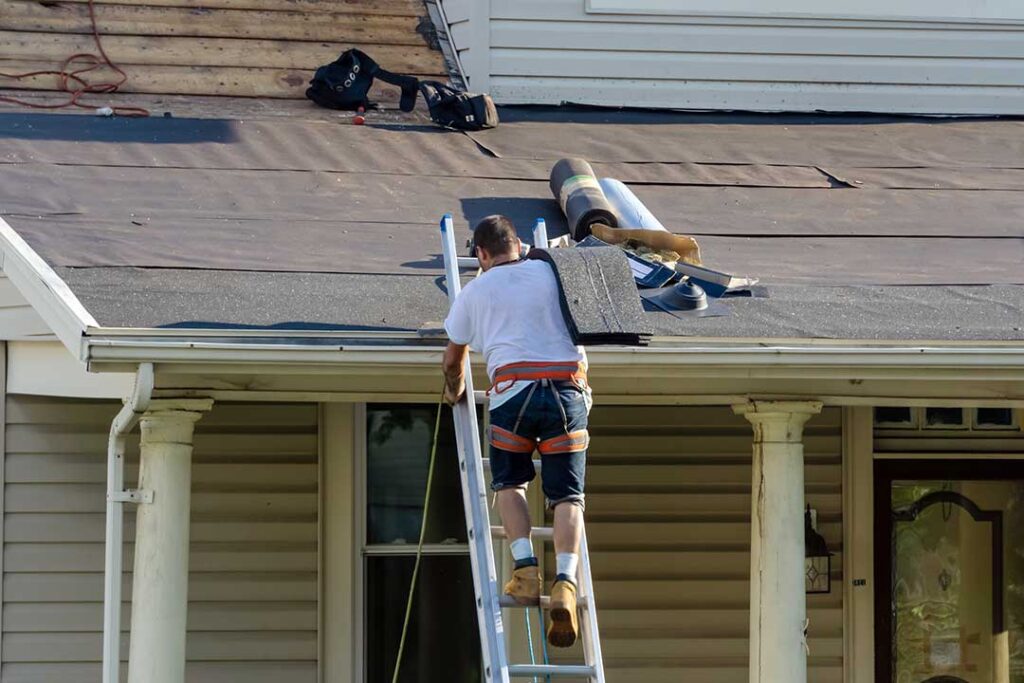
Do not walk on a roof covered with rain, frost, snow, ice, or loose debris. Roof surfaces become especially hazardous during spring thaw, winter storms, and periods of high wind. A temporary tarp can also be dangerous to install without proper fall protection, stable ladder placement, and suitable weather conditions.
How can roof repairs be handled while reducing illness exposure?
Roof work often can be planned so that most communication occurs without face-to-face contact. Photos, written descriptions, phone calls, and electronic documents can reduce the need for people to enter the home.
Before work begins, clarify:
- Whether an inspection can occur from the exterior or attic rather than throughout the home.
- Which rooms, if any, must be entered.
- Whether occupants can remain in a separate area.
- How the work area will be accessed and secured.
- How updates, approvals, and payment records will be exchanged.
- What happens if a worker or household member becomes ill.
If indoor access is necessary, keep the number of people inside low. Open windows or improve ventilation when weather permits, avoid crowded rooms, and keep pets away from the work area. Anyone with respiratory symptoms should stay away from workers and other household members as much as practical. During periods of increased respiratory illness, a well-fitting mask, hand hygiene, and physical distance add useful layers of protection, especially around older adults, people with weakened immune systems, or anyone at higher risk of severe illness.
These measures apply beyond COVID-19. Influenza, respiratory syncytial virus, and other contagious illnesses can also disrupt repair schedules and create avoidable household risk.
Should repairs be delayed during a public emergency?
Urgent repairs generally should not be delayed if postponement could cause greater damage or create a safety hazard. A temporary weatherproofing measure may be appropriate while permanent work is postponed.
Nonurgent work can often wait. Examples include replacing sound shingles for appearance, upgrading ventilation that is functioning adequately, or completing a large reroofing project when no active leak exists.
A useful decision test is:
1. Is water entering the building?
2. Could the condition threaten people, wiring, insulation, or structural materials?
3. Is the damage likely to become more expensive after the next storm or freeze?
4. Can the problem be stabilized safely without beginning a larger project?
If the answer is no to each question, monitoring and scheduling later may be reasonable. If the answer is yes to any of them, prompt protective action is more appropriate.
What temporary measures are reasonable?
Temporary protection should be limited to what is needed to stop further damage. Depending on the situation, this may include covering a damaged area, securing loose materials from the ground, clearing safe-to-reach gutters, or placing interior protection beneath a leak.
Temporary measures are not a substitute for correcting the source of the problem. A tarp that appears secure in calm weather may fail under wind, wet snow, or ice. In Hamilton, seasonal freeze-thaw cycles can enlarge small openings and allow water to move beneath roofing layers before the leak becomes visible indoors.
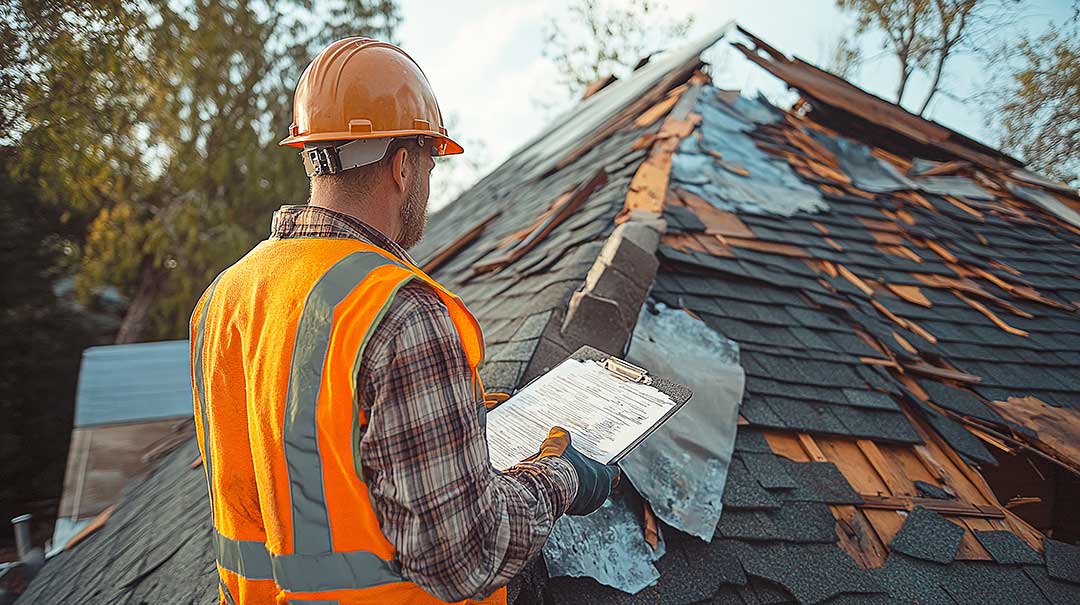
Never use a ladder or climb onto a roof during lightning, strong wind, rain, or icy conditions. Roof repairs should stop when weather creates slipping or fall hazards. People below should also be kept away from falling materials, tools, and unstable roof sections.
How should insurance, permits, and records be handled?
Photographs and written notes are valuable even when the repair is small. Record the date, weather event, visible damage, temporary measures, interior effects, and receipts for emergency materials or cleanup.
Before authorizing work beyond immediate protection, review the applicable insurance policy. Policies differ regarding wind, fallen trees, interior water damage, deductibles, maintenance exclusions, and temporary living expenses. The cause of damage and the condition of the roof before the event may affect coverage.
A written description of the work should identify:
- The damaged area and suspected cause.
- Temporary protection and permanent repairs separately.
- Materials to be used.
- Expected start and completion dates, including weather or supply delays.
- Total price and payment schedule.
- Responsibility for debris removal and interior protection.
- Any permit or inspection requirements.
New York requires written contracts for many home-improvement projects exceeding $500, with specific consumer protections. Emergency conditions can affect cancellation provisions, so documents should be read carefully rather than signed under pressure. Permit needs can vary according to the scope of work and local code requirements. In the Village of Hamilton, building-code questions and inspection requirements should be verified with the local code-enforcement office before work begins.
What warning signs suggest a repair arrangement is unsafe?
Crisis conditions can attract rushed decisions and unreliable repair offers. Be cautious if someone:
- Appears at the door without being invited and demands immediate payment.
- Refuses to provide a written scope of work.
- Wants the entire amount before work begins.
- Pressures a household to sign blank or incomplete documents.
- Claims that insurance approval is guaranteed.
- Discourages photographs, permits, or independent documentation.
- Cannot provide verifiable identification or proof of insurance.
A legitimate emergency does not eliminate the need for clear records. If only temporary protection is authorized, the paperwork should say so. A temporary repair should not quietly become an unapproved replacement project.
How can households prepare before the next crisis?
Keep a basic roof-response kit that includes a flashlight, buckets, plastic sheeting for interior floor protection, towels, gloves, a camera or charged phone, and copies of insurance information. Know the location of the electrical panel and shutoffs, but do not enter areas where water and electricity may be in contact.
After major wind, heavy snow, or ice, inspect from the ground for missing materials, sagging gutters, fallen branches, and new attic moisture. In older homes, check the attic periodically for damp insulation, daylight through roof boards, and staining around chimneys, valleys, and roof penetrations.
The most effective crisis plan is simple: protect people first, stop active water entry when it is safe, limit unnecessary indoor exposure, document the condition, and postpone nonessential work until conditions are stable.
