
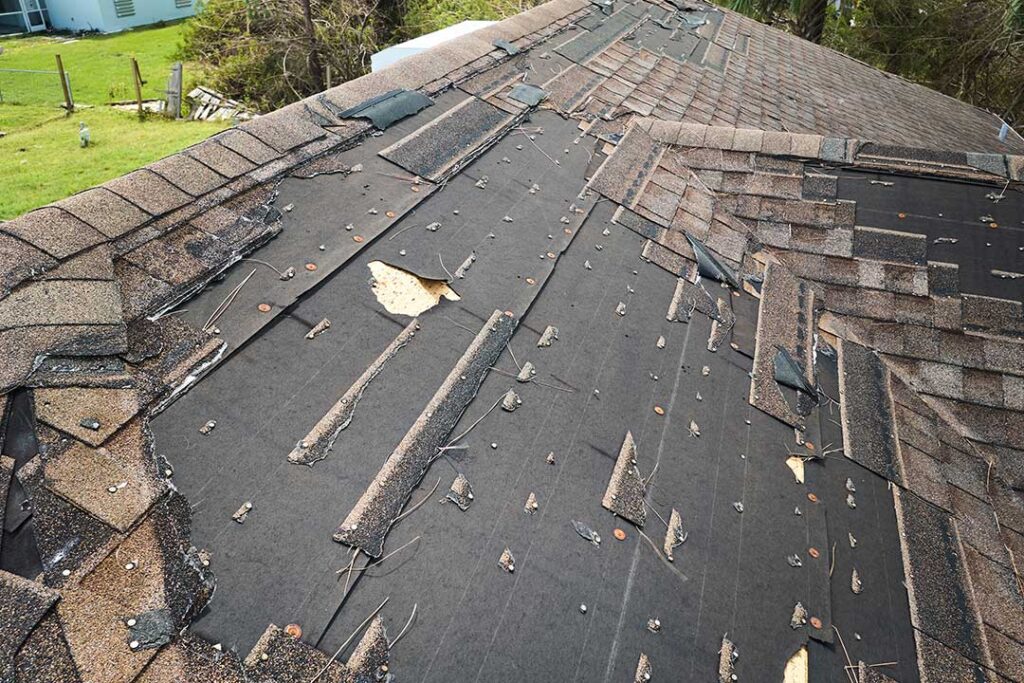
Roof damage rarely begins with a dramatic failure. More often, it starts with a lifted shingle, a small ceiling stain, or water collecting where it should not. Finding these signs early can help prevent moisture from reaching insulation, framing, ceilings, and interior finishes.
For residents of Hamilton, changing seasons make regular observation especially useful. Snow, ice, wind, heavy rain, freeze-thaw cycles, and falling branches can all affect roofing materials over time.
What are the first signs of roof damage?
The earliest warning signs are usually changes in the roof’s appearance, drainage, or the condition of ceilings and attic spaces. Some problems are visible from the ground, while others appear inside the home before the exterior damage is obvious.
Look for:
- Shingles that are cracked, curled, buckled, loose, or missing
- Dark patches or areas with an uneven texture
- Granules collecting in gutters or near downspouts
- Flashing that is bent, loose, rusted, or separated
- Water stains on ceilings or upper walls
- Damp insulation, musty odors, or daylight visible in the attic
- Gutters that sag or hold unusual amounts of shingle material
- Moss or algae associated with persistent dampness
A single loose shingle does not always mean the entire roof needs replacement. It does mean water may have a new path beneath the roof covering, particularly during wind-driven rain or melting snow.
How can roof damage be spotted from the ground?
A ground-level inspection can reveal many problems without requiring anyone to climb onto the roof. Use binoculars if needed, and examine the roof from several angles after clear weather.
Pay attention to roof lines that look uneven or wavy. Shingles should generally form consistent rows. Raised edges, exposed fasteners, missing sections, and patches that appear noticeably different may indicate previous repairs or newer damage.
Check the areas around chimneys, roof vents, plumbing pipes, skylights, and valleys. These locations have more seams and transitions, so they are common places for flashing or sealant to deteriorate.
Also look at the ground around the building. Shingle pieces, metal fragments, or an unusual amount of granule material may have fallen during wind or heavy weather. These findings do not identify the exact source, but they are reasonable signals for closer inspection.
What do ceiling stains and attic odors mean?
A ceiling stain often means water has entered the roofing system, but the visible stain may not be directly below the exterior leak. Water can travel along rafters, roof decking, insulation, and framing before reaching the ceiling surface.
Brown, yellow, gray, or spreading marks deserve attention, especially if they appear after rain or a thaw. Bubbling paint, peeling wallpaper, soft drywall, or a musty smell can also indicate recurring moisture.
The attic may provide additional clues:
- Wet or compressed insulation
- Darkened wood around roof penetrations
- Damp roof decking
- Rusted nails or fasteners
- Mold-like surface growth
- Light visible through roof boards where no opening should exist
- Frost or moisture buildup during cold weather
A small stain that dries quickly may still represent a roof problem. Intermittent leaks can be difficult to notice because they may occur only during certain wind directions, heavy rainfall, or snowmelt.

How does winter weather affect roofs in Hamilton?
Winter damage may not become visible until weeks or months after the original event. Repeated freezing and thawing can widen small cracks, loosen flashing, and place stress on roof edges.
Ice buildup along eaves can interfere with drainage and allow water to move beneath shingles. Snow can also conceal missing or damaged materials until temperatures rise. After a major snowstorm, residents may notice interior staining during the first substantial thaw rather than during the storm itself.
Wind is another concern. Strong gusts can lift shingle edges without removing the entire shingle. The roof may look mostly intact from the ground, while the seal between courses has been weakened.
After severe weather, avoid walking on icy or snow-covered roof surfaces. A roof that appears stable may have hidden weak areas, and ladders can become especially hazardous around ice, wet siding, and uneven ground.
Are gutters useful for finding roof problems?
Yes. Gutters often collect evidence that is difficult to see from the roof itself. A small amount of granule loss can occur as shingles age, but sudden or heavy accumulation may suggest accelerated wear or storm damage.
Gutters that overflow during ordinary rainfall may be blocked, but overflow can also expose drainage problems caused by sagging sections, poor slope, or water moving improperly off the roof. Staining on exterior walls below the roof edge may indicate that water is repeatedly escaping instead of entering the drainage system.
During autumn, leaves and small twigs can hide early warning signs. Cleaning gutters carefully and observing how water moves during rain can help reveal whether roof runoff is reaching the intended outlets.
Which roof problems require urgent attention?
Some conditions should not wait for a routine observation. Prompt attention is warranted when there is active water entering the living space, a large ceiling bulge, a partially collapsed section, exposed electrical equipment near water, or extensive roof material displaced by wind.
A ceiling that is sagging from trapped water can become heavier and may fail without warning. Do not stand beneath it or puncture it unless there is a clear, safe emergency procedure and no electrical hazard.
Urgency is also higher when damage affects structural components, such as visibly cracked or sagging roof decking, separated rafters, or a tree limb resting on the roof. These situations involve fall, collapse, and electrical risks that cannot be safely evaluated from a ladder.
What should homeowners avoid doing during an inspection?
The safest initial inspection is usually visual and performed from the ground or from an accessible attic area. Avoid walking on a roof that is wet, icy, steep, fragile, or covered with moss. Older roofing materials may be less stable than they appear.
Do not cover a suspected leak with plastic or loose materials if wind could carry them away or if they could trap moisture. Avoid applying caulk or roofing cement over an unknown problem, since a temporary patch can hide the source and make later evaluation more difficult.
Photographs taken from a safe location can help track whether a crack, stain, or missing shingle is changing. Record the date, recent weather, and the location of any interior moisture. This information can help distinguish a one-time event from a recurring leak.
How often should a roof be checked?
A practical schedule is to look over the roof and drainage system at least twice a year, often in spring and fall, and again after unusually strong wind, heavy rain, hail, or significant snow and ice.
The spring check should focus on winter effects: lifted shingles, damaged flashing, blocked drainage, and stains that appeared during snowmelt. The fall check should include gutters, roof penetrations, loose branches, and areas where leaves may collect.
Homes with mature trees, older roofing materials, complex roof shapes, or frequent ice buildup may need closer observation. Regular checks do not prevent every problem, but they improve the chance of finding a minor defect before it becomes interior water damage.
