
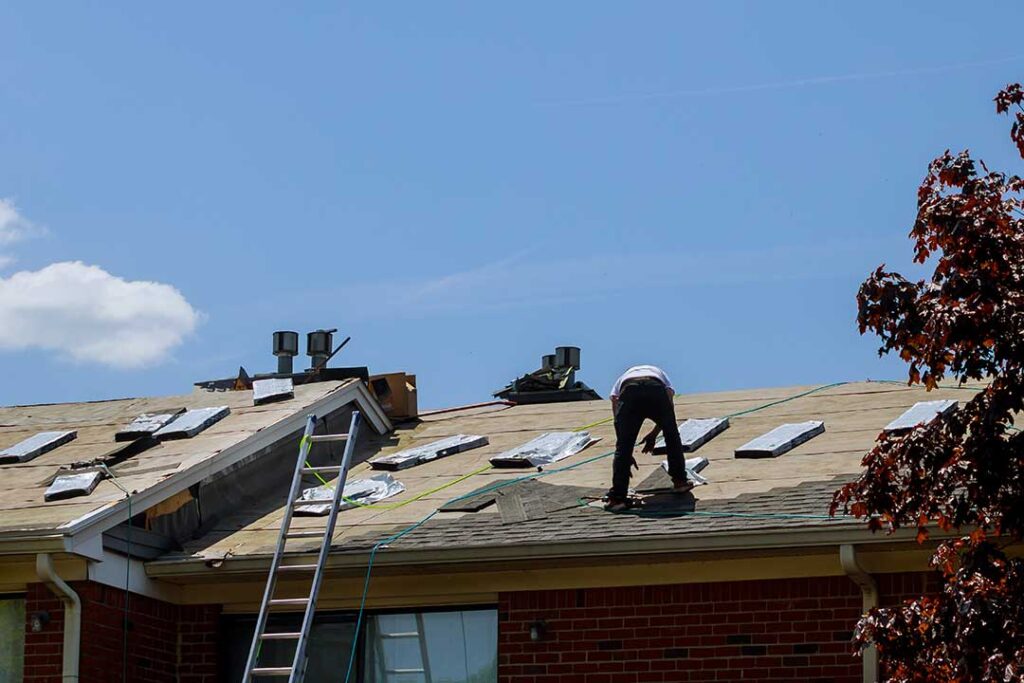
Roof leaks are usually caused by a small number of recurring problems: damaged roofing materials, failed flashing, clogged drainage paths, ice dams, and openings around roof penetrations. In Hamilton, NY, seasonal changes can make these issues more noticeable because roofs must handle snow, ice, wind, heavy rain, and repeated freezing and thawing.
A leak may begin above the ceiling stain, sometimes several feet away. Water can travel along roof decking, rafters, insulation, or interior framing before becoming visible indoors. That is why finding the source often requires looking beyond the exact location of the drip.
What are the most common causes of roof leaks?
The most common causes are aging materials, storm damage, poor drainage, deteriorated sealants, and installation weaknesses. Some problems develop slowly, while others appear after a single storm or freeze-thaw cycle.
Typical sources include:
- Missing, cracked, curled, or lifted shingles
- Damaged metal flashing around roof joints
- Clogged gutters or downspouts
- Ice dams along roof edges
- Leaks around chimneys, vents, skylights, and other penetrations
- Worn pipe boots and rubber seals
- Roof valleys that collect water and debris
- Inadequate ventilation or attic moisture
- Punctures caused by branches, tools, or foot traffic
- Older roofing systems that have reached the end of their service life
How do damaged or aging shingles cause leaks?
Shingles protect the roof deck from direct exposure to rain and melting snow. As they age, they may become brittle, lose protective granules, crack, curl, or loosen around their fasteners. Wind can lift weakened shingles, allowing water to move underneath.
A few damaged shingles do not always produce an immediate ceiling stain. Water may first soak the underlayment or roof decking, then appear indoors later. This delay can make a leak seem unrelated to the weather event that caused it.
After strong wind, residents may notice loose pieces in the yard, exposed dark patches on the roof, or shingles that no longer lie flat. Granules collecting in gutters can also indicate normal aging or accelerated surface wear, although a small amount by itself does not prove that the roof is failing.
Why does flashing fail?
Flashing is the material installed where water needs extra protection, such as roof edges, valleys, walls, chimneys, and roof-to-wall transitions. It directs water away from joints that are more vulnerable than broad, uninterrupted roof surfaces.
Flashing can leak if it becomes bent, corroded, separated, improperly fastened, or covered with deteriorated sealant. Older repairs may also fail when sealant shrinks or cracks after years of temperature changes.
The areas around chimneys and sidewalls deserve particular attention. Water can enter behind flashing and travel along framing before reaching a ceiling or wall. A stain near a chimney does not necessarily mean the chimney itself is the only problem; the surrounding roof intersection may be allowing water inside.
Can clogged gutters cause roof leaks?
Yes. Clogged gutters can contribute to leaks by preventing water from draining away from the roof. Leaves, pine needles, ice, and other debris may cause water to back up beneath the roof edge or overflow against siding and trim.
During winter, blocked drainage can make ice buildup more likely. In warmer weather, repeated overflow may saturate fascia boards, soffits, wall sheathing, and other nearby materials.
Gutters are not the only concern. Downspouts that discharge too close to the foundation can create basement moisture problems, while poorly aligned gutters may allow water to run behind them. Roof drainage works as a system, so the roof edge, gutter, downspout, and discharge area all matter.
What are ice dams, and how do they create leaks?

An ice dam forms when snow melts on a warmer section of the roof and refreezes near the colder eaves. The resulting ridge of ice can hold water against the shingles. That trapped water may move beneath roofing materials and into the attic or upper walls.
Ice dams are often related to uneven roof temperatures. Heat escaping from the living space can warm parts of the roof, while insufficient insulation or ventilation leaves the eaves colder. Snow cover, outdoor temperature, sun exposure, and air leakage can all affect how quickly ice forms.
Removing snow or ice with sharp tools can damage shingles and create another pathway for water. If a large ice buildup is threatening the roof edge or interior, avoiding roof access is the safer choice, especially during freezing conditions.
Why do vents, skylights, and pipe boots leak?
Every opening through a roof creates a potential weak point. Plumbing vents, exhaust vents, skylights, satellite mounts, and similar features depend on flashing and weather-resistant seals.
Rubber pipe boots can become cracked or split with age. Vent flashing may loosen, while skylight seals can deteriorate or fail after repeated expansion and contraction. Fasteners installed through exposed areas can also create small entry points if they loosen or lack adequate protection.
A leak around a ceiling fixture, bathroom, attic vent, or upper wall may be connected to one of these openings rather than to the shingles directly above it.
How do roof valleys contribute to leaks?
A roof valley is the inside angle where two roof slopes meet. It carries a significant amount of runoff, so debris, leaves, snow, and ice can place extra stress on this area.
Leaks may occur when valley flashing is damaged, when shingles are cut or installed improperly, or when debris prevents water from flowing freely. Valleys should not be treated as ordinary roof sections because they handle concentrated drainage during heavy rain and melting snow.
Can attic moisture be mistaken for a roof leak?
Yes. Condensation in an attic can look similar to a roof leak. Warm, humid air from the home may reach a cold roof deck and form water droplets. This moisture can dampen insulation, stain wood, encourage mold growth, and eventually affect ceilings.
Bathroom fans that discharge into the attic, blocked soffit vents, insufficient insulation, and air leaks around attic openings can all contribute. Condensation often appears during cold weather, even when the roof has not been leaking during rain.
Clues that point toward condensation include widespread dampness, frost on roof framing, or moisture that appears during cold periods without precipitation. A true roof leak is more likely to worsen after rain, wind-driven snow, or rapid snowmelt, although both problems can occur at the same time.
What should residents do when a ceiling stain appears?
First, protect people and belongings from falling water and avoid electrical fixtures that are wet or surrounded by moisture. If water is actively entering, place a container beneath the drip and carefully move furniture away from the area.
Photographs and notes about the weather can help connect the stain to rain, snow, wind, or thawing conditions. The visible stain should not be painted over until the source and the affected materials have dried.
From the ground, look for obvious issues such as missing shingles, sagging gutters, broken branches, or heavy ice buildup. Roof access can be dangerous when surfaces are wet, icy, steep, or weakened. Interior damage, persistent dampness, exposed wiring, or a sagging ceiling calls for prompt attention because the problem may extend beyond a cosmetic stain.
Regular observation, clear drainage paths, and attention to vulnerable roof details can reveal many problems before a minor defect becomes widespread water damage. In a climate with snowy winters and frequent freeze-thaw cycles, small changes in the roof, attic, gutters, and ceilings are worth taking seriously.
