

Regular roof maintenance helps prevent small defects from becoming water damage, structural decay, or premature roof replacement. For households in Hamilton, NY, routine attention is especially useful because roofs must handle winter snow, freeze-thaw cycles, wind, rain, ice, and periods of heavy moisture throughout the year.
What does regular roof maintenance include?
Regular maintenance is the process of checking, cleaning, and correcting roof-related problems before they become emergencies. It is more than looking at shingles from the ground.
A basic maintenance routine may include:
- Checking shingles, metal panels, flashing, vents, and exposed sealants
- Clearing leaves, twigs, and other debris from roof surfaces and valleys
- Inspecting gutters and downspouts for blockage or separation
- Looking for damaged areas after severe weather
- Examining attic spaces for moisture, daylight, stains, or poor airflow
- Trimming branches that rub against the roof or drop debris
- Recording changes with photographs and dated notes
Maintenance does not mean replacing materials that are still performing properly. The purpose is to identify conditions that could shorten the roof’s service life or allow water into the building.
How does maintenance help prevent leaks?
Most roof leaks begin with a relatively limited defect. A lifted shingle, cracked flashing joint, blocked valley, or damaged vent boot may allow water to enter gradually. By the time a stain appears on a ceiling, moisture may already have affected insulation, sheathing, framing, or interior finishes.
Routine inspections can identify warning signs such as:
- Missing, loose, curled, or cracked shingles
- Rust, dents, or open seams on metal roofing
- Gaps around chimneys, vents, skylights, or wall intersections
- Granules collecting in gutters
- Darkened or damp areas in the attic
- Water marks that grow after rain or thawing
- Peeling paint or swollen trim near upper walls
Early correction is usually less disruptive than responding to an active leak during a storm. It also allows property owners to distinguish between an isolated repair and a broader roofing problem.
Why are Hamilton winters hard on roofs?
Winter conditions can stress roofing materials in several ways. Snow adds weight, ice can obstruct drainage, and repeated freezing and thawing may enlarge small cracks or openings. Wind can also loosen shingles, ridge caps, flashing, or metal components.
Ice dams are another concern on some buildings. They can form when heat escapes into a cold roof area, melts snow higher on the roof, and allows water to refreeze near the eaves. The resulting water may back up beneath roofing materials.
Maintenance cannot eliminate every winter hazard, but it can reduce contributing conditions. Useful steps include:
- Keeping attic insulation and ventilation functioning properly
- Checking that gutters and downspouts are open before winter
- Repairing areas where flashing has separated
- Removing branches that could fall under snow or wind load
- Watching for ice buildup and unusual interior moisture
- Avoiding foot traffic on snow-covered or icy roofing materials
Snow removal from a roof is not automatically necessary. It can damage shingles, membranes, or metal surfaces if done improperly, and working on an icy roof presents a serious fall hazard. Decisions about removal should account for roof design, snow depth, structural concerns, and safe access.
Can maintenance extend the life of a roof?
Yes, maintenance can extend useful roof life by reducing avoidable damage and addressing weak points early. It cannot stop normal aging, manufacturing limitations, storm damage, or poor original installation, but it may help roofing materials perform closer to their expected service range.
A roof’s condition depends on more than its installation date. Two roofs of the same age may differ because of:
- Sun exposure and shading
- Ventilation and attic temperature
- Frequency of severe weather
- Quality of installation
- Moisture around roof edges and penetrations
- Debris accumulation
- Previous repairs
- The type and condition of the underlying deck
A roof that receives occasional inspections can often be managed more predictably than one that is ignored until a visible leak appears. Maintenance records may also help track recurring trouble spots and support decisions about repair or replacement.
What should homeowners check after a storm?
After strong wind, heavy rain, hail, or a major snow event, the roof should be checked from safe locations first. Binoculars can help identify visible problems without climbing.
Look for:
- Shingles or metal pieces in the yard
- New bare patches or irregular roof lines
- Fallen branches or punctures
- Damaged flashing
- Loose gutters or downspouts
- Water stains in ceilings or upper walls
- Damp insulation or musty attic odors
- Debris lodged in valleys or drainage areas
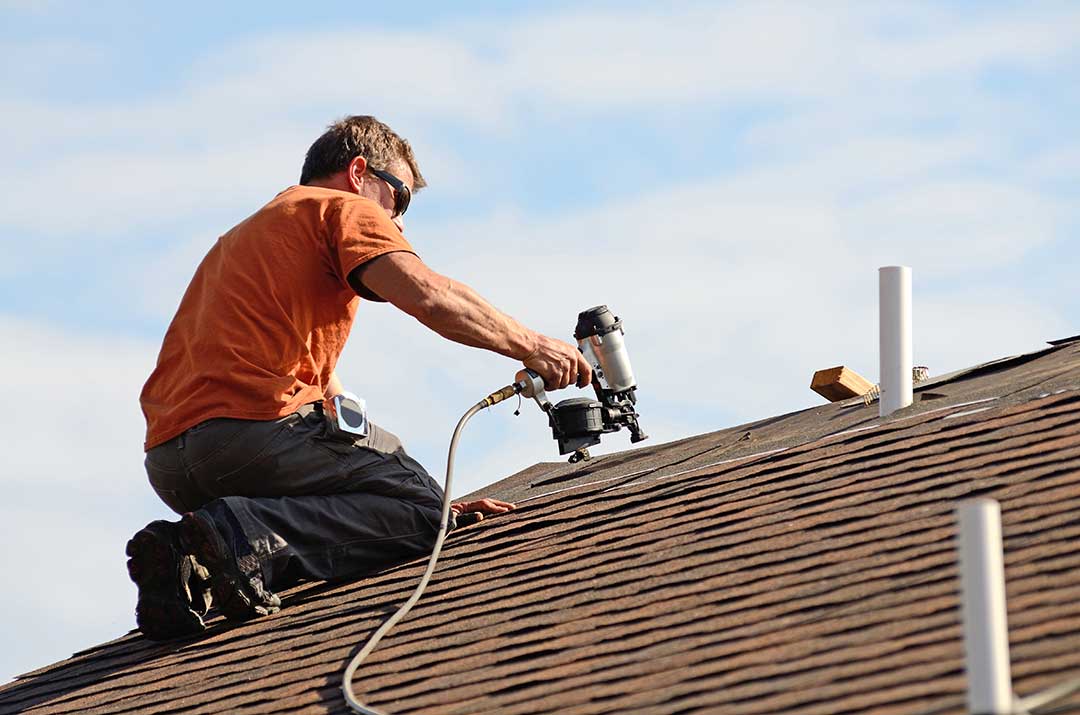
Not every storm-related problem is immediately visible from the ground. If a roof has been struck by a tree, shows sagging, has exposed decking, or allows active water entry, the situation may involve a safety risk. Access should be avoided until the structure can be evaluated safely.
How do gutters affect roof performance?
Gutters are part of the roof drainage system. They help move water away from roof edges, walls, foundations, doors, and walkways. If they are clogged or poorly aligned, water may overflow against fascia boards, seep behind exterior materials, or collect near the foundation.
Gutter maintenance is particularly useful in areas with mature trees and changing seasons. Leaves and small branches can accumulate quickly, while winter freezing may worsen existing cracks or loose connections.
During routine checks, look for:
- Water spilling over the front edge during rain
- Gutters pulling away from the fascia
- Sagging sections
- Separated seams
- Downspouts that discharge too close to the building
- Ice forming repeatedly in the same location
Cleaning frequency depends on nearby trees, roof design, and local weather. A single annual cleaning may not be enough for a property surrounded by shedding trees.
Is attic inspection part of roof maintenance?
Yes. The attic can reveal roof problems that are not obvious outside. It also provides clues about ventilation, insulation, and moisture movement.
On a clear day, an attic inspection may reveal:
- Pinpoint daylight through the roof deck
- Water stains or darkened wood
- Damp insulation
- Condensation on nails or roofing hardware
- Mold-like growth caused by persistent moisture
- Blocked vents
- Areas where insulation is thin or displaced
Moisture does not always come from a roof leak. Bathroom exhaust directed into an attic, inadequate ventilation, air leakage from the living space, and condensation can produce similar symptoms. Identifying the source matters because sealing an exterior roof opening alone may not resolve an indoor moisture problem.
How often should a roof be inspected?
A practical schedule is to check the roof and drainage system at least twice a year, commonly in spring and fall, with additional inspections after significant weather. Older roofs, properties with many surrounding trees, and buildings with past leak history may need more frequent attention.
Inspections should also occur before major changes to the property, such as installing equipment, adding penetrations, or performing attic renovations. Any work that affects the roof surface or ventilation system should be evaluated as part of the larger roofing system rather than as an isolated project.
The safest maintenance habit is simple: observe conditions regularly, document changes, and address warning signs before moisture, ice, or wind can turn a limited defect into a larger building problem.
